
Medical Alert Scams: What Seniors and Families Should Know
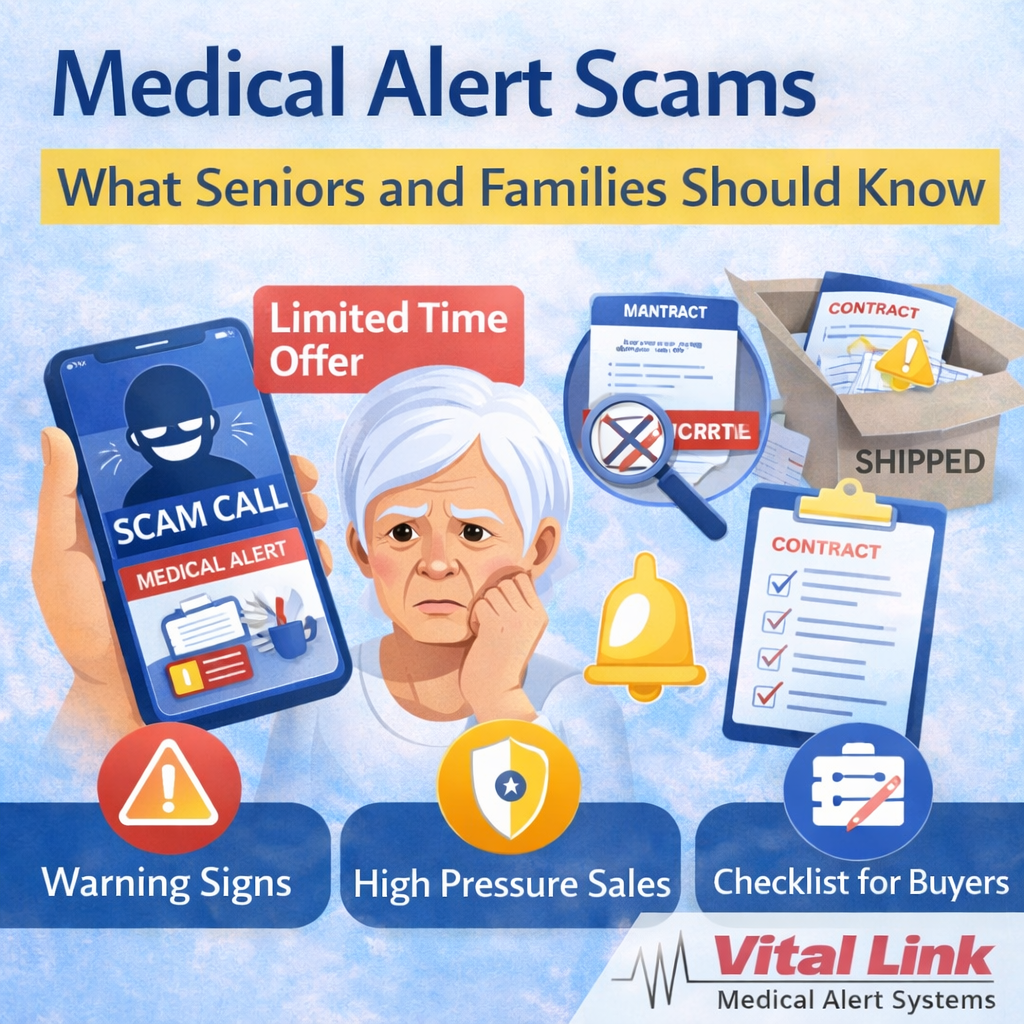
Medical alert scams are an unfortunate reality in the senior safety industry. While many medical alert companies operate ethically and focus on supporting independence and peace of mind, there are bad actors who use pressure, misleading claims, and aggressive sales tactics to take advantage of seniors and their families.
We believe it is important to acknowledge that reality openly. Seniors and families deserve clear, honest information so they can make calm, informed decisions without fear or urgency.
Why Medical Alert Scams Exist
Medical alert systems are often researched during moments of concern after a fall, hospitalization, or change in mobility. Unfortunately, some companies exploit those moments by creating urgency or using fear based messaging to push quick decisions.
Ethical medical alert providers understand that safety decisions should be made thoughtfully, with transparency and time to ask questions.
Cold Calls Are a Major Red Flag
Legitimate medical alert companies should not cold call seniors.
If a company contacts you out of the blue offering a medical alert system or asking about your current service, the safest response is to hang up immediately. Seniors and families should always initiate contact themselves after researching a company.
Cold calls are commonly used by scam operations and high pressure sales groups, not by trusted providers.
Know the Name of Your Medical Alert Company
It is important for seniors and families to know the name of their medical alert company.
Any legitimate company should immediately identify themselves when they call, including the company name and the name of the person calling. If a caller avoids identifying themselves, seems vague about who they represent, or changes details during the conversation, that is a red flag.
Transparency should never need to be requested. It should be offered willingly.
One Rule That Prevents Many Medical Alert Scams
A simple rule can prevent many medical alert scams:
If a call comes in out of the blue and the caller asks for money or payment information, hang up immediately.
Do not provide credit card information, bank details, or personal information during an unsolicited call. Instead, call your medical alert company back using a phone number you already have saved or listed on official paperwork.
Common Medical Alert Scams and High Pressure Sales Tactics
Below are common medical alert scams and high pressure tactics used against seniors. Some are outright scams. Others are predatory practices that may be technically legal but should still be treated as warning signs.
Scammers Pretending to Be Your Medical Alert Company
Some callers claim they are from your medical alert company without clearly identifying the company name. They may say there is a billing issue, an expired card, or a problem with service and then ask for credit card information.
If this happens, hang up and call your real provider using a saved number.
Fake Account or Service Interruption Calls
These calls claim monitoring will stop, the account is suspended, or service will be interrupted unless payment is made. The goal is to create panic and quick compliance.
Upgrade Required Claims
Some callers claim your system is outdated or will stop working soon and that you must upgrade immediately. Legitimate providers do not require surprise upgrades through unsolicited calls.
Medicare Linked or Free Medical Alert Claims
Any claim that a standard medical alert system is free with Medicare or covered by Medicare is a red flag. Medicare does not pay for traditional medical alert systems.
Robocalls Offering Free Equipment
Robocalls may promise free equipment or activation. These offers often lead to ongoing charges, hidden fees, or difficult cancellation processes.
Free Equipment Followed by Fees
Some companies advertise free equipment but later charge equipment fees or hide costs in monthly charges. Seniors should not be paying equipment fees for a medical alert system.
Urgency and Pressure Language
Sales phrases like today only, last chance, or immediate action required are pressure tactics. Medical alert decisions should never feel rushed.
Fear Based Messaging
Ethical providers discuss safety honestly. Exaggerating risk or using fear to force a decision is a warning sign.
Long Term Contracts and Hard Cancellation
Long term contracts, early termination fees, or difficult cancellation processes are common complaints. Ethical companies do not lock seniors into lengthy agreements.
Automatic Shipping and Billing
Some companies ship equipment without clear consent and begin billing once the shipment occurs. Families should insist on written confirmation before any shipment.
Refusal to Provide Pricing in Writing
If pricing is only discussed verbally and the company refuses to send written details, that is a major red flag.
Scripted Supervisor Escalation
If hesitation leads to a transfer to a supervisor who increases pressure or suddenly offers discounts, you may be dealing with a high pressure sales structure.
Withholding Company or Agent Identity
Any refusal to clearly provide the company name or the name of the person calling is unacceptable.
What Seniors and Families Should Expect From a Legitimate Company
- No cold calls
- Clear company name and representative name provided immediately
- No urgency or pressure
- No equipment fees
- No long term contracts
- Clear written pricing when requested
- Easy to understand cancellation policies
- Time to ask questions and decide calmly
Why Reviews Matter
Before choosing a medical alert company, families should research reviews.
It is especially helpful to search for negative reviews and read them carefully. Patterns of complaints about billing, cancellation, pressure tactics, or poor support are important signals.
Searching the company name along with words like complaint, billing, cancel, refund, or contract can provide helpful insight.
Why Choosing a Local, Well Established Company Can Provide Peace of Mind
One way seniors and families can reduce the risk of medical alert scams is by choosing a local, well established company with a real presence in the community.
Local providers are easier to verify, easier to contact, and more accountable. Families can confirm the company’s address, speak with real staff, read local reviews, and know exactly who they are working with.
Established companies rely on long term trust and reputation rather than pressure or urgency. There is no need for cold calls, aggressive sales tactics, or rushed decisions.
For many families, working with a local provider helps remove doubt and uncertainty. Knowing who you are dealing with, how to reach them, and where they are located can make the entire process feel calmer and more secure.
Trusted Consumer Protection Resources
- Federal Trade Commission Medical Alert Enforcement Information
- Medicare Fraud Prevention Guide
- Report Medicare Fraud and Abuse
- FCC Guidance on Spoofed Robocalls
- California Attorney General Consumer Alerts
Supporting Safe and Confident Decisions
Choosing a medical alert system should feel supportive, not stressful. Seniors deserve respect, transparency, and time when making decisions about their safety.
All Vital Link systems can be worn in the shower and in the rain, supporting continuous protection during daily routines. Our focus is helping seniors remain independent while giving families peace of mind.
Learn more by visiting the Compare All Products page.
Next Steps
If you are researching medical alert systems, take your time, ask questions, and trust your instincts. A legitimate company will welcome thoughtful conversations and never pressure you.
Call (510) 338 3466 or visit Vital Link to speak with a real person and get clear answers.