Aging in Place Home Safety Checklist: A Room by Room Guide for Bay Area Families
Most people do not want to move. They want to stay in the house where they raised their kids, where they know which stair creaks and which window sticks. That is a good goal, and it is a reachable one.
This aging in place home safety checklist walks through the house one room at a time. Nothing here requires a remodel or a contractor. Most of it is an afternoon of small changes that quietly remove the things most likely to cause a problem.
August is National Wellness Month, which makes it a natural time to do this. The weather is good, the days are long, and if family is visiting before school starts, you have extra hands for the parts that need a ladder.
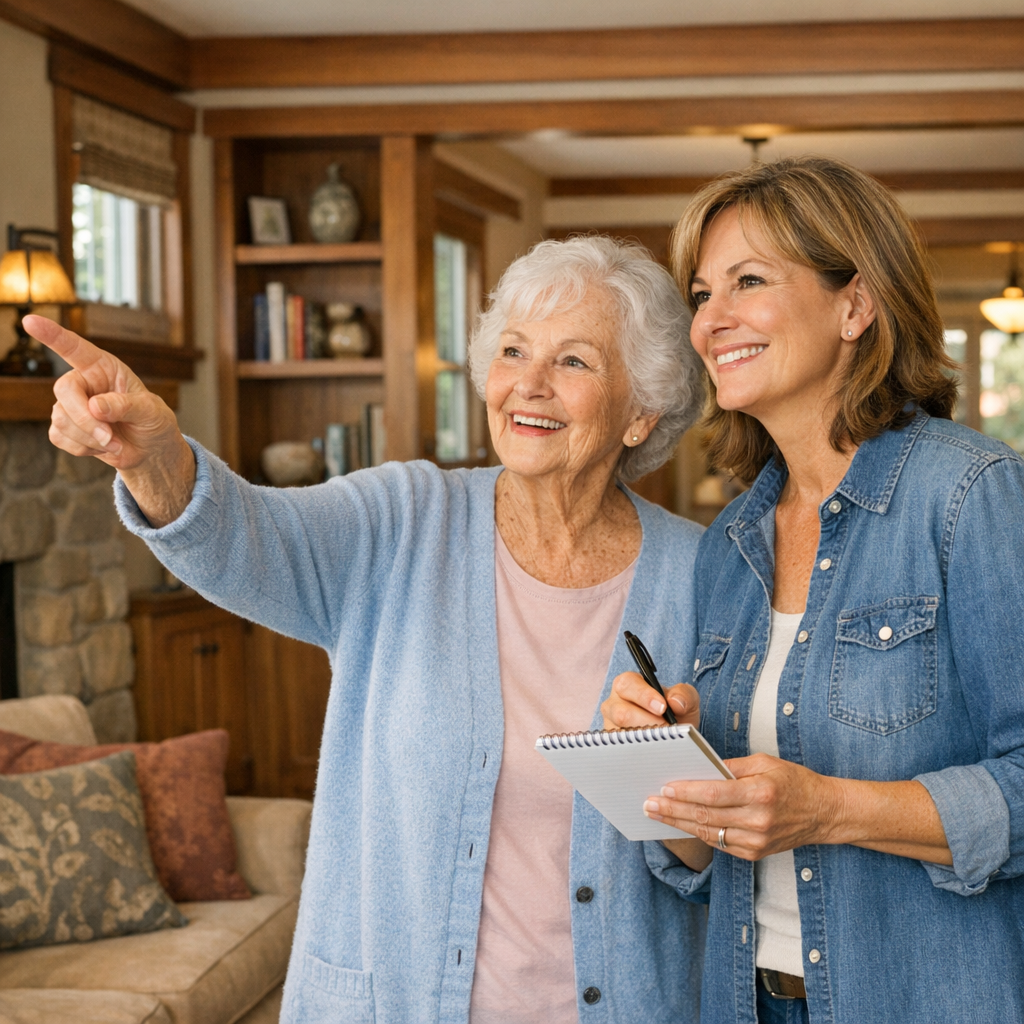
Here is the short version, if you only read one paragraph. An aging in place home safety checklist works best when you fix the floor first, the light second, and the reach third. Clear the walking paths, make sure every route from bed to bathroom is lit, and move daily items to waist height. Those three things remove most of the everyday risk in an ordinary home.
If you would rather have someone walk the house with you, our technicians do that in person across the Bay Area, and you can book a visit from our Oakland office.
Start With the Front Door, Hallways, and Stairs
The paths you walk without thinking are the ones worth fixing first, because you travel them in the dark and while carrying things. Walk from the front door to the kitchen, then from the bedroom to the bathroom, and look at the floor the whole way.
Throw rugs are the single most common thing we ask families to deal with. A rug that slides, curls at the corner, or has a thick edge is a trip waiting to happen. Either remove it or fix it down with double sided carpet tape all the way around, not just at the corners.
Extension cords and phone chargers crossing a walkway are the second. Run them along the baseboard instead. If an outlet is so far from the chair that a cord has to cross the room, that is worth a call to an electrician, not a workaround.
On stairs, you want a handrail on both sides if the staircase allows it, and you want each rail to run the full length, past the top and bottom step. Mark the edge of the top and bottom step with a strip of contrasting tape. Depth perception changes with age, and those two steps are where people misjudge.
Lighting matters as much as the floor. Put a lamp within arm’s reach of the bed, plug motion sensor night lights into the hallway and bathroom, and replace any bulb that has gone dim. Older eyes need considerably more light to see the same edge, and a hallway that feels bright to a visiting adult child can be genuinely dark to a parent.
The Bathroom Deserves the Most Attention
The bathroom is where the most serious in-home falls happen, because it combines water, hard surfaces, and movements that require balance. It is also the room where the fixes are the cheapest.
Install grab bars at the tub or shower entry and beside the toilet. Real grab bars, anchored into studs or with proper hollow wall anchors rated for the load. A towel bar and a suction cup handle are not grab bars, and both have failed people at the exact moment they were needed.
Add a non-slip mat inside the tub and a low pile bath mat with a rubber backing outside it. A shower chair and a handheld sprayer turn showering from a balance exercise into a seated task, which is often the difference between a senior showering confidently and quietly showering less often.
Raise the toilet if standing up has become work. A raised seat or a comfort height toilet takes strain off the knees and hips. Keep a nightlight on in there permanently, because the bathroom trip at 3 a.m. is the one that gets people.
Finally, think about what happens if someone is on the floor in a locked bathroom. Change the privacy lock to one that can be opened from the outside with a coin or a small screwdriver, and hang that tool on a nail nearby. It costs almost nothing and it has saved paramedics real minutes.
Not sure what to fix first? Call our Oakland office at (510) 338-3466 and we will talk through the house with you, or book an in-home visit.
The Kitchen: Reach, Grip, and Heat
In the kitchen, the goal is to eliminate reaching and lifting, because that is where balance and grip get tested at the same time. Move the everyday plates, mugs, and pans to the shelves between hip and shoulder height, and let the top shelf hold the things used twice a year.
Get rid of the step stool if it wobbles. If a stool is truly needed, use one with a high handle to hold on to and four wide feet. Anything with a folding step and no support is not worth the risk of a broken wrist.
Swap heavy cast iron and full sized casserole dishes for lighter versions where you can. A full pot of water is heavy enough to pull someone off balance at the stove. Fill the pot at the sink with a small pitcher instead of carrying it full across the room.
Check the stove knobs. If it is hard to tell at a glance whether a burner is on, a strip of bright tape at the off position solves it. An automatic shutoff device is worth considering if anything has ever been left on, and it is a far kinder conversation than one about moving out.
Keep a working fire extinguisher within reach of the kitchen door, not under the sink behind the cleaning supplies. Test the smoke and carbon monoxide alarms while you are in there, and put a reminder on the calendar to change the batteries twice a year.
The Bedroom and the Middle of the Night
Most of the bedroom fixes are about the route to the bathroom at night. That trip happens half awake, in the dark, often in a hurry, and it is worth engineering carefully.
Keep the path from the bed to the bathroom door completely clear. No shoes, no laundry basket, no phone charger crossing the floor. Add a lamp with a large switch or a touch base on the nightstand, plus a motion night light low on the wall.
Bed height matters more than people expect. Feet should reach the floor flat while sitting on the edge. A bed that is too high means a small drop on the way down, and one that is too low means a hard push to stand up.
Put a phone and a flashlight on the nightstand, and if there is a medical alert button, that is where it charges. The button only helps if it is on the body or within reach, so the habit of putting it back on in the morning matters more than the device itself.
Outside the House: Steps, Walkways, and August Heat
The outside of the house gets checked the least and changes the most, especially in a Bay Area summer. Walk the front path, the back steps, and the garage in the middle of a bright day and again at dusk, because the hazards look different in each.
Look for uneven pavers, lifted concrete from tree roots, and the first step down from the back door. Trim back anything that narrows the path. Add a light with a motion sensor at the front door and at the back, because porch lights that only turn on manually usually stay off.
Heat is the seasonal item this month. California has had repeated heat advisories this summer, and older adults feel heat differently, in part because several common blood pressure and heart medications change how the body cools itself. Plan errands and garden time for the morning, keep water within reach in every room, and know where the nearest cooling center is before a hot stretch arrives.
Add power to the same conversation. Public Safety Power Shutoffs are part of Bay Area life now, and a home that relies on electricity for lighting, cordless phones, or a stairlift needs a plan that does not depend on the grid. Our full guide to senior safety during Bay Area power outages covers what to prepare.
What a Checklist Cannot Fix
A safety checklist reduces the chance that something happens. It cannot shorten the time it takes to get help once something has. That gap is what a medical alert system covers, and it is the reason so many families finish the checklist and then call us.
The device that fits depends on the life being lived, not the age on the birth certificate. Someone who is home most of the day does well with the Home Link at $29.00 per month, month to month with no contract. If the house has no landline, the Cellular Home Link at $34.95 per month runs on a cellular signal instead.
Someone who walks to the store, gardens, or takes BART to see grandkids wants coverage away from the house. The Mobile X at $44.95 per month works anywhere there is cell service and includes fall detection. On the at-home units, fall detection is a $10.00 per month add-on.

| Device | Best For | Monthly Cost |
|---|---|---|
| Home Link | Home use with a landline connection | $29.00/mo |
| Cellular Home Link | Home use with no landline | $34.95/mo |
| Mobile Link | Errands, walks, and appointments | $39.95/mo |
| Mobile X | Active days out, fall detection built in | $44.95/mo |
| Mobile W | Watch style, worn all day | $44.95/mo |
💡 Do the lockbox at the same time. A key in a lockbox means the fire department opens the door instead of breaking it, and every Vital Link client gets one free. Here is how a lockbox saves minutes
Why Bay Area Families Call a Local Company
Vital Link has been family owned since 1981, and our office is on Telegraph Avenue in Oakland. When you call, someone here answers, and when you order a system, one of our technicians drives to the house and sets it up.
That matters more than it sounds. National companies ship a box and leave the hardest part, the part where the equipment gets placed correctly and tested in the actual home, to whoever opens the package. Our technician finds the dead spot in the back bedroom, mounts the button where it will actually be worn, and runs a live test to the monitoring center before leaving.
We serve Alameda, Contra Costa, Marin, Napa, San Francisco, San Mateo, Santa Clara, Santa Cruz, and Solano counties, with no long term contracts and no rate increases after you sign up. There is special pricing for veterans and Meals on Wheels recipients, so ask when you call.
- Call us at (510) 338-3466
- Visit our contact page to schedule an in-home visit
- Serving Alameda, Contra Costa, Marin, Napa, San Francisco, San Mateo, Santa Clara, Santa Cruz, and Solano counties
Keep Reading
| Safer Home for Aging Parents Seven room by room fixes that take an afternoon. |
Read More |
| Fall Prevention Tips for Bay Area Seniors Habits and home changes that lower fall risk. |
Read More |
| Signs an Aging Parent Needs Help at Home Eight quiet changes worth paying attention to. |
Read More |
| Medical Alert Systems in Alameda County Local installation and monitoring across the East Bay. |
Read More |
Sources
- CDC: Older Adult Falls Data
- National Institute on Aging: Preventing Falls at Home: Room by Room
- National Council on Aging: Falls Prevention for Older Adults
- AARP: Livable Communities and Home Preferences
- National Institute on Aging: Hot Weather Safety for Older Adults
Staying Home Should Not Mean Staying Alone
Talk to a real person in Oakland about what fits the house and the routine, with no pressure and no contract.
Frequently Asked Questions
What should be on an aging in place home safety checklist first?
Start with the floor, the light, and the reach. Clear every walking path of rugs and cords, add lighting along the route from the bed to the bathroom, and move daily items to between hip and shoulder height. Those three changes remove most of the routine risk in an ordinary home and none of them require a contractor.
How much does it cost to make a home safer for aging in place?
Most of the list costs under a few hundred dollars. Grab bars, non-slip mats, night lights, and carpet tape are inexpensive. The bigger items, like a raised toilet or a stairlift, are worth pricing separately. A medical alert system starts at $29.00 per month for the Home Link, month to month with no contract.
Does a medical alert system work outside the house?
Some do. The Home Link and Cellular Home Link are designed for coverage in and around the home. The Mobile Link, Mobile X, and Mobile W work anywhere there is cellular service, so they cover walks, errands, and appointments. Mobile X and Mobile W include fall detection.
Who installs the system in the Bay Area?
A Vital Link technician from our Oakland office comes to the home, places the equipment, tests it live with the monitoring center, and shows the client how to use it. That is different from national companies, which ship a box and leave the setup to the family.
Is August a good time to do a home safety review?
Yes. August is National Wellness Month, daylight is long, and family is often visiting before school starts, which gives you extra hands for anything that needs a ladder. It also lets you handle heat and power outage preparation before the hottest and windiest weeks of the year.